Initial Phase
The initial phase of the skin genetics consortium is focused on defining the landscape of common genetic variation that contributes to the risk of developing common skin diseases and traits across global populations.
This initial project is funded by the Leo Foundation. We are working closely with population-scale biobanks across the world to perform genetic analysis on skin conditions that are routinely collected in electronic health records.
The results from this study will be made available through the Skin Knowledge portal and will form the basis of future studies investigating the shared and distinct components of genetic risk between diseases and use this information to understand the biological mechanisms of disease and how this information can be used to identify optimal therapeutic intervention strategies to improve health outcomes.

Initial Phase Phenotypes
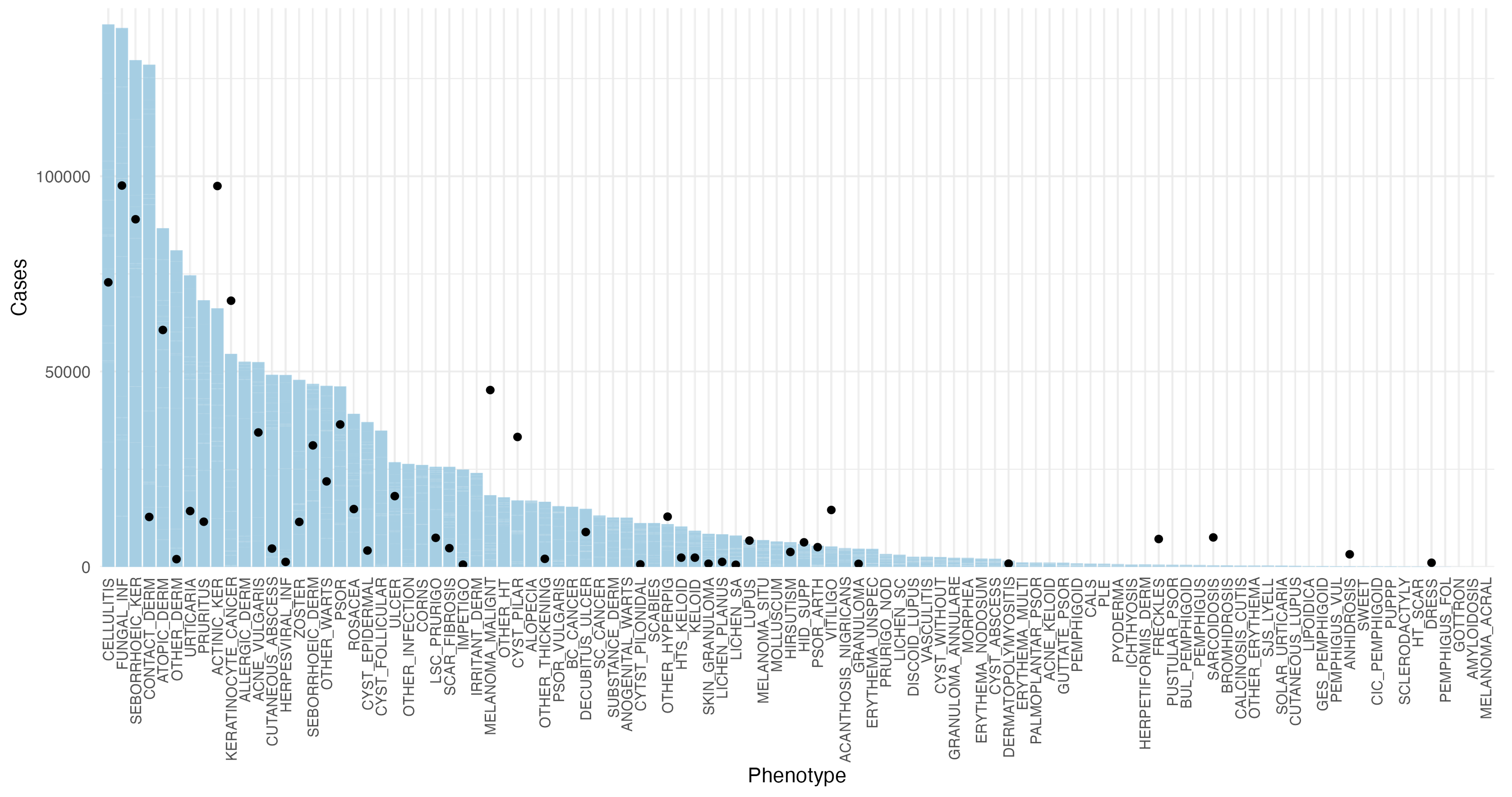
Our Clinical Working Group have identified the following skin phenotypes and phenotype groups for initial investigation in each of our contributing Biobanks and Research Cohorts
- Acanthosis nigricans
- Acne keloid
- Acne vulgaris
- Acral Melanoma
- Actinic keratosis
- Allergic contact dermatitis
- Amyloidosis of the skin
- Anhidrosis
- Anogenital (venereal) warts
- Atopic dermatitis
- Basal cell carcinoma
- Bromhidrosis
- Bullous erythema multiforme and Toxic epidermal necrolysis
- Bullous Pemphigoid
- Cafe au Lait spots
- Calcinosis cutis
- Cellulitis
- Cicatricial alopecia
- Cicatricial pemphigoid
- Contact dermatitis (allergic, irritant or unspecified)
- Corns and callosities
- Cutaneous abscess, furuncle and carbuncle
- Decubitus ulcer
- Dermatitis due to substances taken interlly
- Dermatitis herpetiformis
- Dermatophytosis
- Dermatopolymyositis
- Discoid lupus erythematosus
- Drug rash with eosinophilia and systemic symptoms syndrome
- Epidermal cyst
- Erythema multiforme
- Erythema nodosum
- Erythematous condition, unspecified
- Febrile neutrophilic dermatosis
- Follicular cyst
- Freckles
- Generalized pustular psoriasis
- Gottron papules
- Granuloma annulare
- Granulomatous disorders of skin and subcutaneous tissue
- Guttate psoriasis
- Herpes gestationis
- Herpesviral [herpes simplex] infections
- Hidradenitis suppurativa
- Hirsutism
- Hypertrophic scar
- Hypertrophic scar or keloid scar
- Ichthyosis vulgaris
- Impetigo
- Irritant contact dermatitis
- Keloid scar
- Keratinocyte cancers
- Lichen planus
- Lichen sclerosus et atrophicus
- Lichen simplex chronicus
- Lichen simplex chronicus and prurigo
- Localised (or linear) scleroderma
- Lupus erythematosus
- Malignt melanoma
- Melanoma in situ
- Molluscum contagiosum
- Necrobiosis lipoidica
- Other forms of dermatitis
- Other forms of epidermal thickening
- Other forms of erythema multiforme
- Other hypertrophic disorders of the skin
- Other local infections of the skin
- Other melanin hyperpigmentation
- Other viral warts
- Pemphigoid
- Pemphigus
- Pemphigus foliaceus
- Pemphigus vulgaris
- Pilonidal cyst
- Pilonidal cyst with abscess
- Pilonidal cyst without abscess
- Polymorphous light eruption
- Prurigo nodularis
- Pruritic urticarial papules and plaques of pregncy (PUPPP)
- Pruritus
- Psoriasis
- Psoriasis vulgaris
- Psoriatic arthritis
- Pustulosis palmaris et plantaris
- Pyoderma gangrenosum
- Pyogenic granuloma
- Rosacea
- Sarcoidosis of skin
- Scabies
- Scar conditions and fibrosis of skin
- Sclerodactyly
- Seborrhoeic dermatitis
- Seborrhoeic keratosis
- Solar urticaria
- Squamous cell carcinoma
- Subacute cutaneous lupus
- Trichilemmal cysts
- Ulcer
- Urticaria
- Vasculitis limited to the skin
- Vitiligo
- Zoster